What Happens on Installation Day?
Letting someone drill through your wall is the part people worry about. Here's what a domestic air conditioning installation actually involves, so there are no surprises.
How long it takes
A single room is usually a day. Two rooms sharing one outdoor unit is typically a day, sometimes spilling into a second. Three rooms is normally two days.
The variable is pipe routing, not the number of units. A room where the indoor unit sits on an external wall directly behind the outdoor unit is quick. A room where the pipework has to travel through a loft or along a ceiling void takes considerably longer.
Your surveyor should have told you which yours is before the day.
Before they arrive
- Clear the wall where the indoor unit is going, and about a metre either side
- Clear access to the outside wall — move bins, furniture, garden pots
- Make sure someone over 18 is in for the day
- Point out anything buried you know about — cables, pipes, an old chimney breast
What they'll do
Protect the room. Dust sheets down, furniture covered. There is drilling, so there will be some dust regardless.
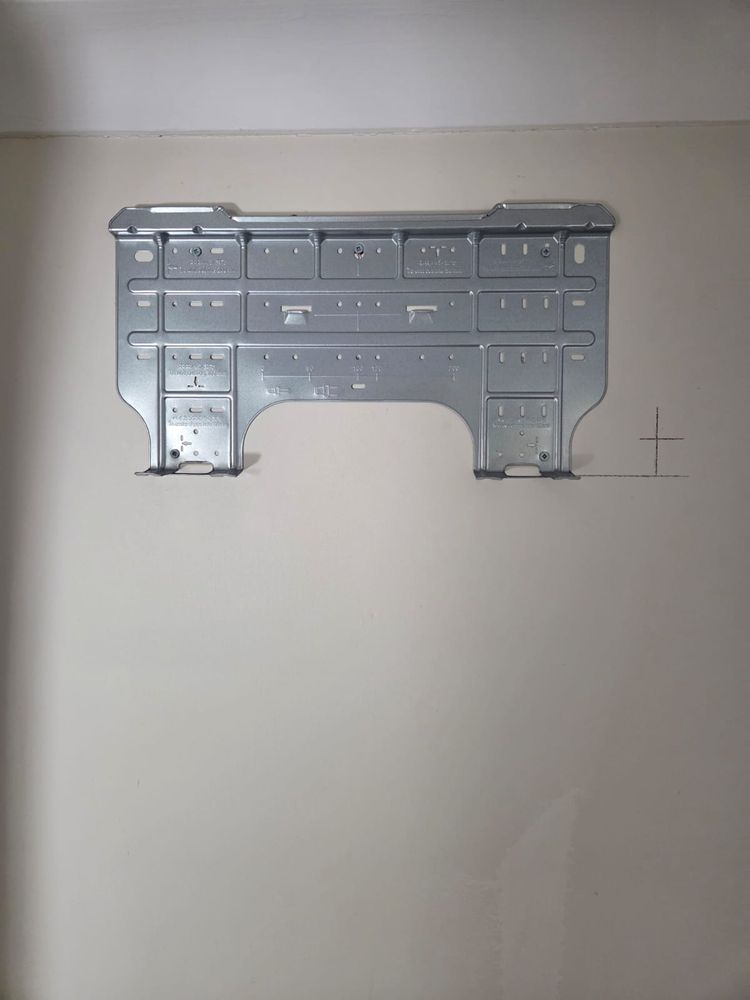
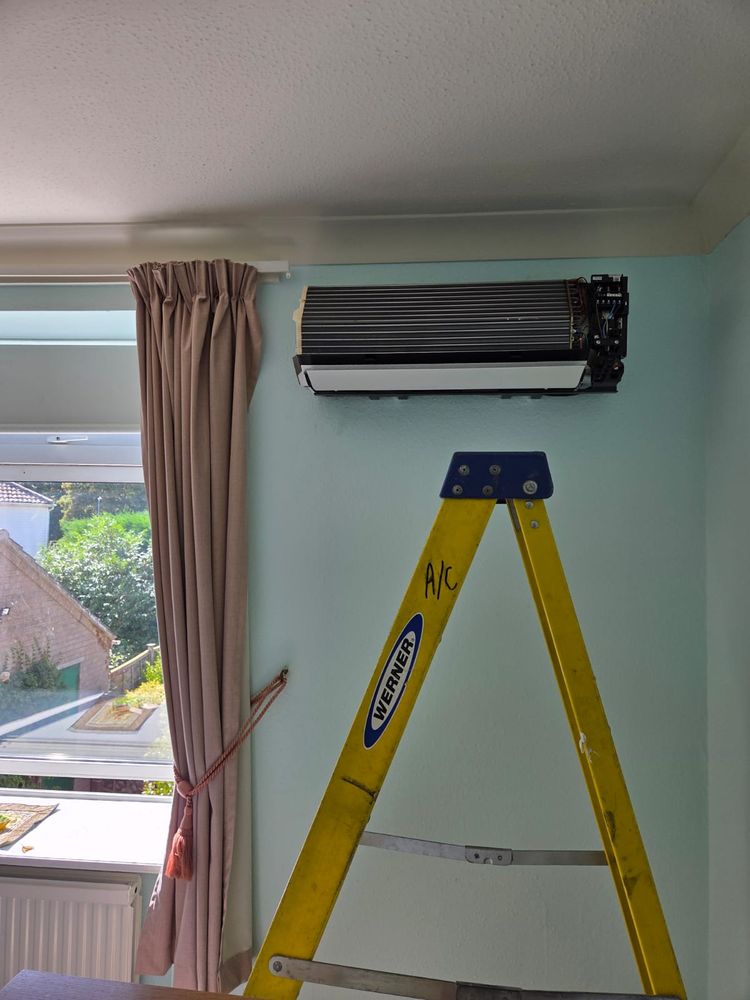
Mount the indoor unit. A bracket goes on the wall, then a core hole is drilled through to the outside — typically around 65mm, angled slightly downward so condensate drains away rather than back into the room.
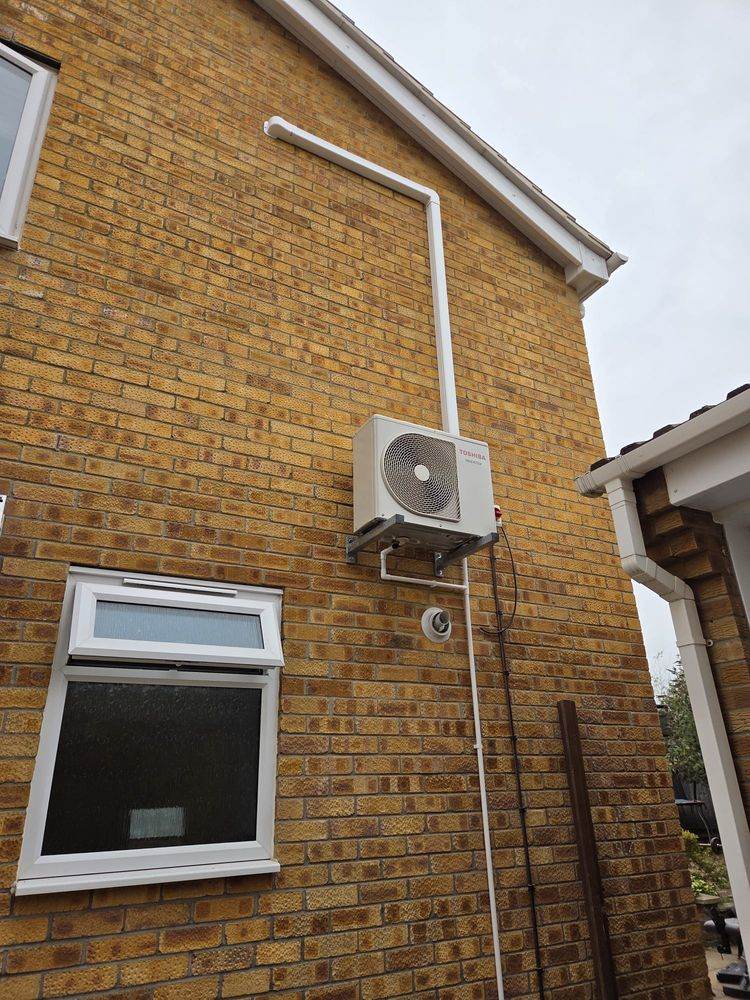
Fit the outdoor unit. Onto wall brackets or a ground stand, on anti-vibration mounts so it doesn't transmit hum into the building.
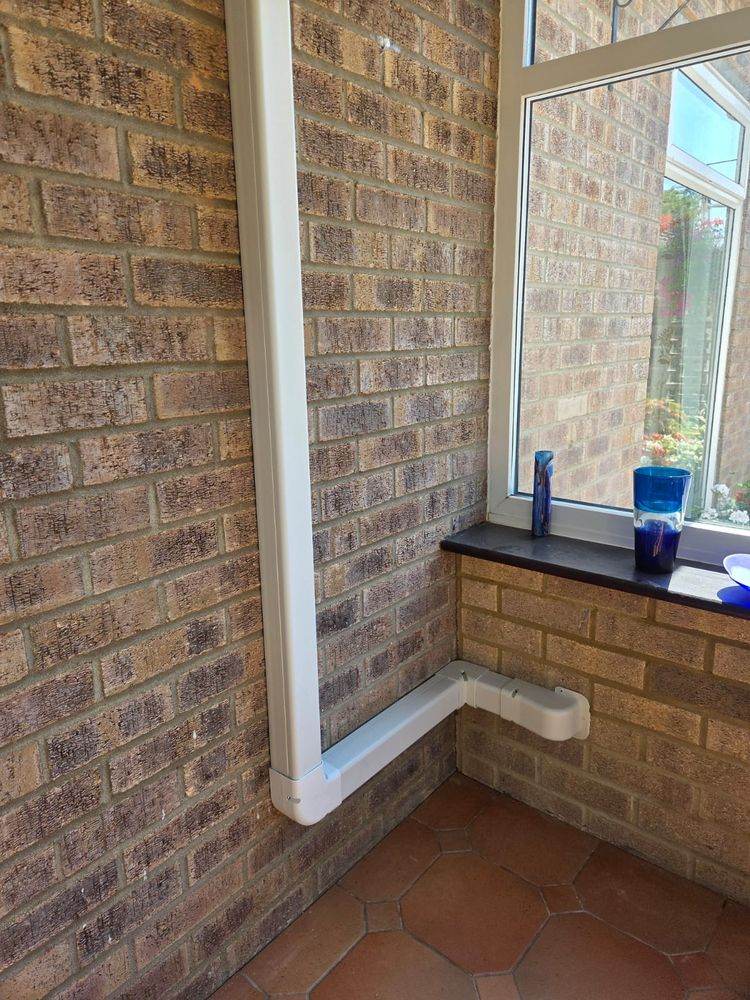
Run the pipework. Insulated refrigerant lines, an interconnecting cable and a condensate drain, usually inside white trunking outside. This is the part that takes the longest.
The electrical work. Air conditioning normally needs its own supply, which means a qualified electrician and, in most cases, notification under building regulations. Check your quote includes this.
Pressure test. The system is charged with nitrogen and held under pressure to prove there are no leaks. This isn't optional and it isn't quick.
Evacuation. A vacuum pump removes air and moisture from the pipework. Rushing this is the single most common cause of systems failing early, so if it seems to be taking a while, that's a good sign rather than a bad one.
Commission and test. Refrigerant released, system run in both heating and cooling, temperatures checked, controls set up and paired to your phone if you've got Wi-Fi control.
Clear up. All packaging removed. Cardboard from a multi-split is bulkier than you'd expect, and it should leave with the installer, not sit in your garden.
Before they leave
Ask them to show you how to use it properly — not just on and off, but the modes, the timer and the app. Ten minutes here saves a lot of fiddling later.
You should also receive documentation of the installation and details of the manufacturer warranty and how to keep it valid.
Thinking about it for your own home?
A survey takes about an hour, costs nothing, and you'll get a written price with no obligation.
Book a free home survey